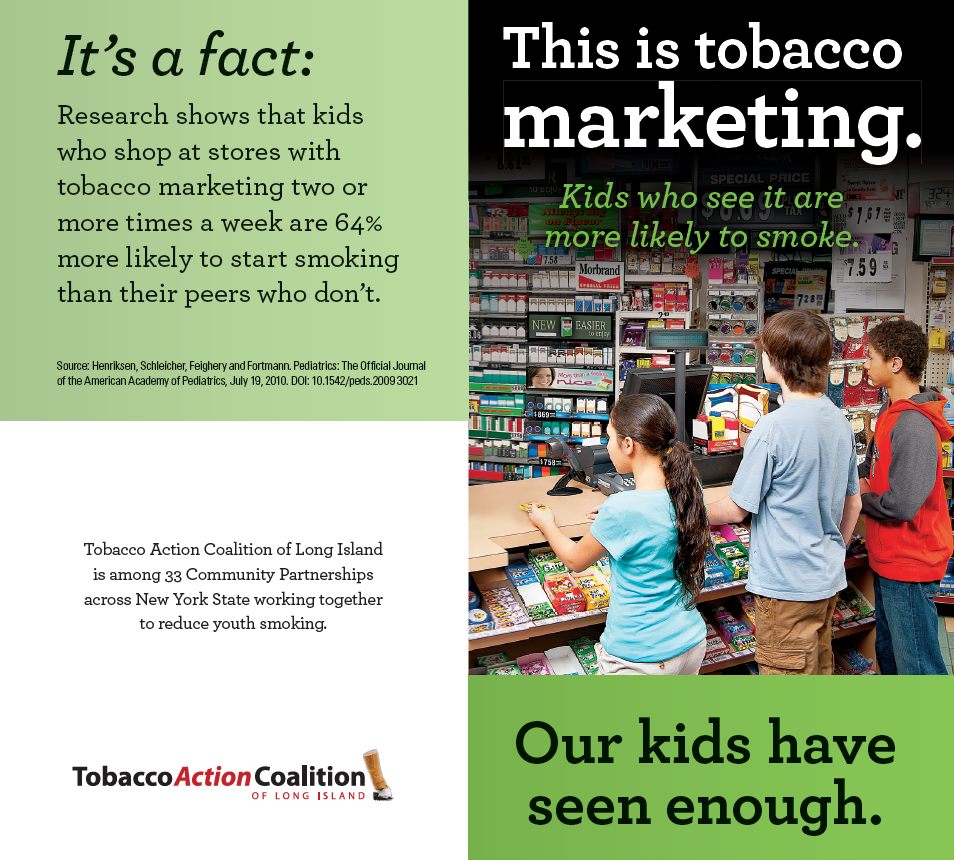
You may not have seen all the tobacco marketing in the stores, but your kids have.
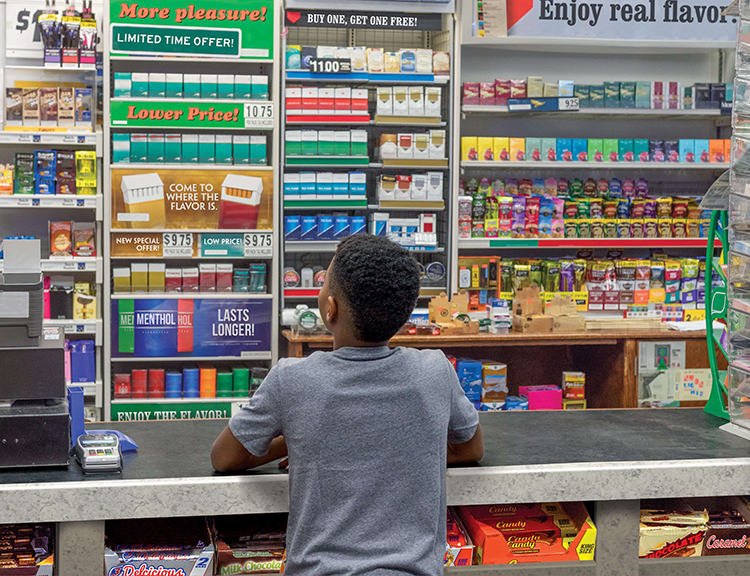
Tobacco marketing refers to the posters and signs inside and outside stores, as well as the colorful, well-lit displays of tobacco products behind the counter in most convenience stores, gas stations, pharmacies and grocery stores.
From the 1950s to the present, different defendants, at different times and using different methods, have intentionally marketed to young people under the age of twenty-one in order to recruit ‘replacement smokers’ to ensure the economic future of the tobacco industry.
—U.S. District Court Judge Gladys Kessler Final Opinion, United States v. Philip Morris
To learn more about ending the tobacco epidemic in NYS visit the Public Health Law Center.
Sweet, Cheap, and Easy: Tobacco Industry Tactics
Explore how they do this below to understand and expose these tactics, helping to reduce smoking rates.




Place
Tobacco Sales Regulations in New York
We have a number of resources available for community leaders, schools, lawmakers, policymakers, change influencers, employers, colleges, businesses, tenants, property owners/landlords and organizations focused on youth.
Local Retain Environment Policies in NYS
Local Retain Environment Policies in NYS
Local Authority and Additional Restrictions
Local municipalities can impose additional restrictions on tobacco sales. Examples include prohibiting sales in pharmacies and limiting the number and location of tobacco retailers. Some local governments restrict sales near schools and cap the total number of tobacco retailers.
Key Measures in New York State
- Prohibiting tobacco sales in pharmacies and stores with pharmacies.
- Implementing local retail policies to control the sale of tobacco products.
- Providing resources through the Public Health Law Center for tobacco control.
Ongoing Issues
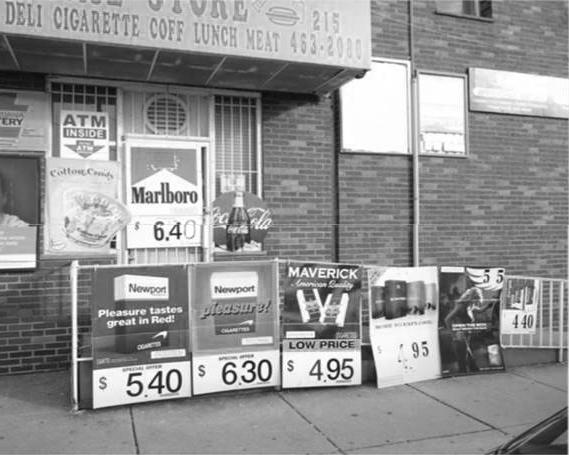
More tobacco retailers increase exposure to tobacco marketing, raising smoking rates among youth and making quitting harder for adults. Low-income neighborhoods have higher retailer density, leading to higher smoking rates among residents with lower education and income.
Solutions
Fortunately, states and local communities can take additional steps to prevent tobacco companies from undermining the positive effects of cigarette excise taxes.
These steps include implementing or strengthening minimum price laws, raising tobacco retail licensing fees, and mandating a minimum package size for all tobacco products.
Price
Raising tobacco prices is crucial for preventing youth smoking, reducing overall tobacco use, and encouraging quitting.
New York State leads with the highest cigarette tax nationwide, taxes on e-cigarettes, and bans on tobacco product discounts and coupons.
However, a persistent challenge remains: while the FDA mandates a minimum pack size of 20 cigarettes to maintain higher prices, other tobacco products like cigars and cigarillos can still be sold cheaply, undermining efforts to curb tobacco use effectively.
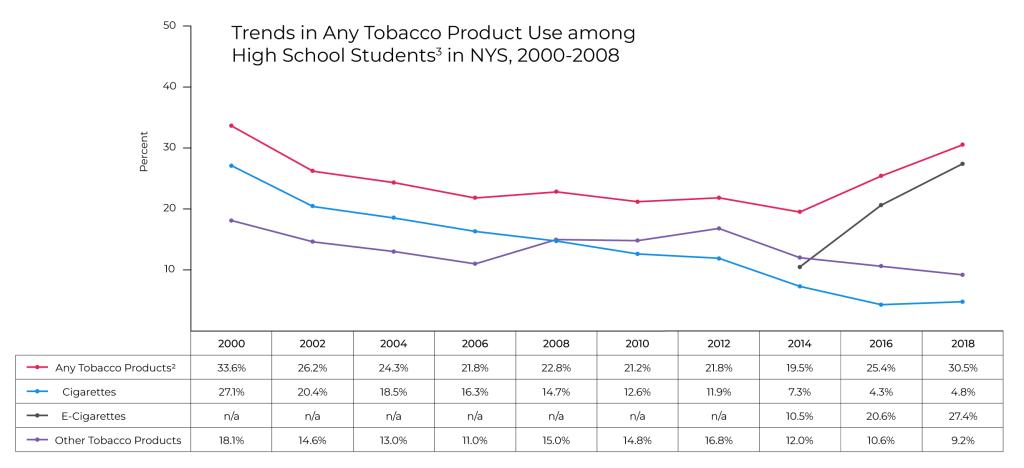
High School Students: OTP Use Outpaces Cigarettes in 2018
Product
The tobacco and vape industries attract youth with sweet, fruity, and candy-flavored products, which make these products seem less harsh and harmful.
In New York State, flavored tobacco products, banned in 2009 for cigarettes except menthol, saw youth usage rates surpassing cigarettes. Following the introduction of flavored e-cigarettes in 2013, youth e-cigarette use surged by 160% from 2014 to 2018, reaching 30.5% among high school students. New York responded by prohibiting flavored e-cigarettes, including menthol, effective May 18, 2020.
Menthol Tobacco: Disproportionate Impact and Calls for Regulation
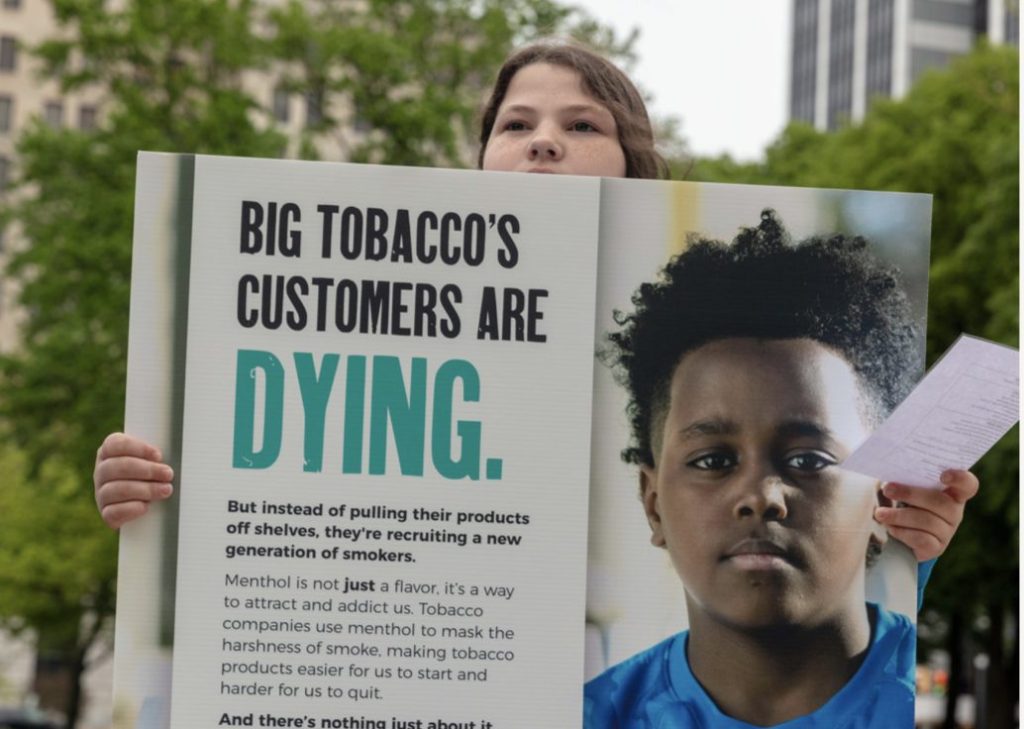
Menthol cigarettes and flavored tobacco products disproportionately affect African American adults and youth, who are targeted by aggressive marketing strategies. This targeting has contributed to higher rates of smoking initiation and addiction among this demographic.
The NAACP advocates for banning menthol in cigarettes to mitigate these health disparities. Solutions include restricting the sale of all flavored tobacco products, including menthol, to protect public health.
Promotion
Menthol Tobacco and Health Disparities
Menthol cigarettes and flavored tobacco products have disproportionately impacted African American adults and youth, who are often targeted with aggressive marketing. This has led to higher rates of smoking initiation, addiction, and lower success rates in quitting smoking.
The NAACP has recently called for the FDA to ban menthol in cigarettes to address these disparities. Advocates suggest restricting the sale of all flavored tobacco products as a critical step to protect public health.
- Retail stores typically display an average of 21 interior tobacco ads
- Most advertising is placed in convenience stores where 75% of teens shop weekly
- Solutions include limiting the density of tobacco retailers per capita and proximity to schools
Local municipalities can impose additional restrictions on tobacco sales.
Examples include prohibiting sales in pharmacies and limiting the number and location of tobacco retailers. Some local governments restrict sales near schools and cap the total number of tobacco retailers.